Books.
Four books at the intersection of surgery, philosophy, and the Mediterranean imagination. A memoir, a scholarly volume on medical ethics, a biographical novel, and an inquiry into personal ontology — distinct in form, continuous in preoccupation.
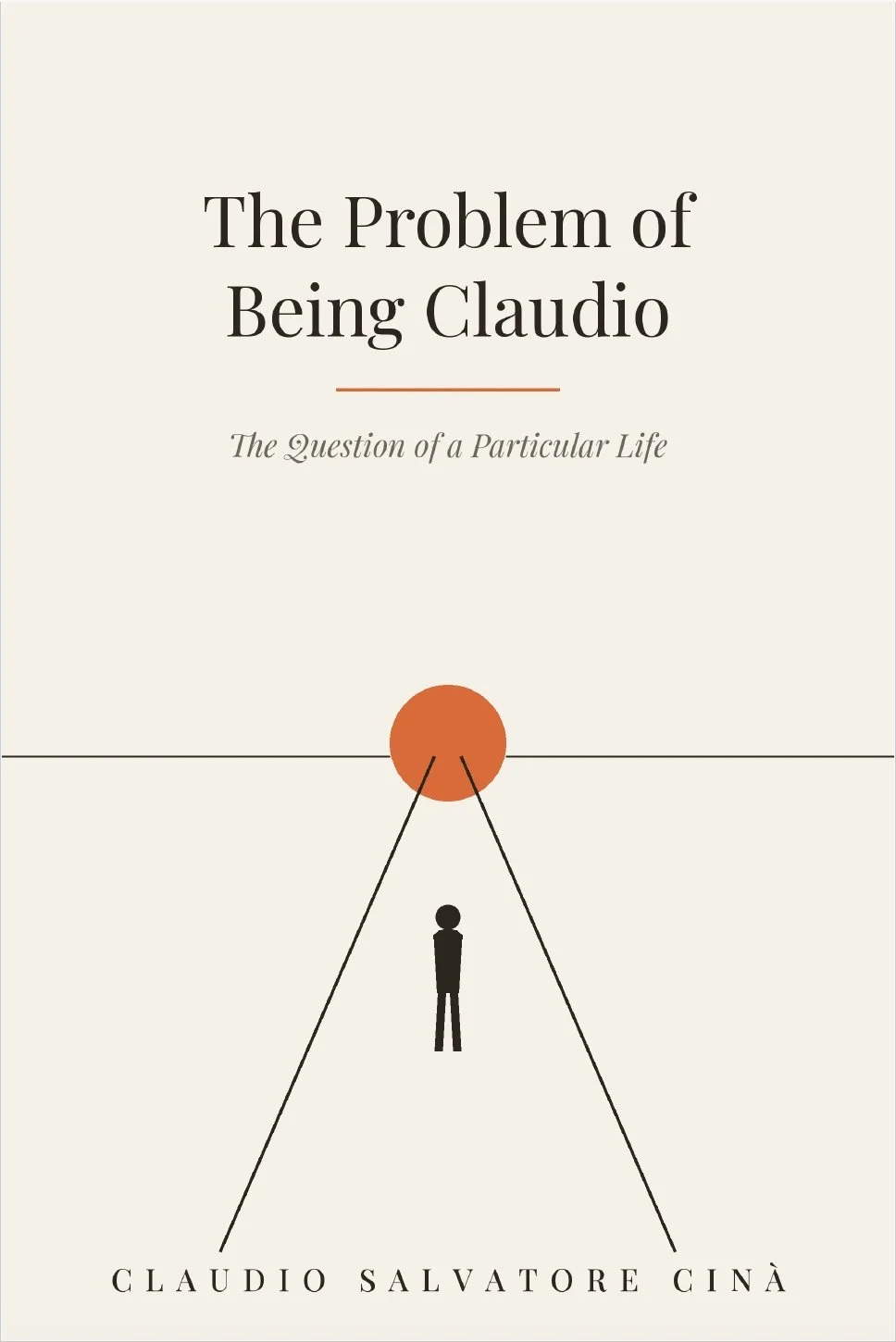
The Problem of Being Claudio
The Question of a Particular Life
One July morning, a seventy-two-year-old man sets out to walk twenty kilometres under the Sicilian sun, carrying a question he has held since he was six: why am I this particular person, rather than no one at all? The book is the record of that walk and of the life it retraces. The Catania of Latin declensions, the operating theatre where the question fell silent for forty years, emigration and return, and the slow stripping away of every structure in which an answer had ever seemed to live.
A surgeon by formation, the author examines his own life as he once examined a syndrome: describe before interpreting. Philosophy walks alongside, Augustine and Heidegger, Nagel and Parfit, but always through objects rather than arguments. The conclusion is unfashionable. The question cannot be answered. It does not need to be. It needs to be accompanied.
Available on Amazon in Kindle, paperback, and hardcover editions.
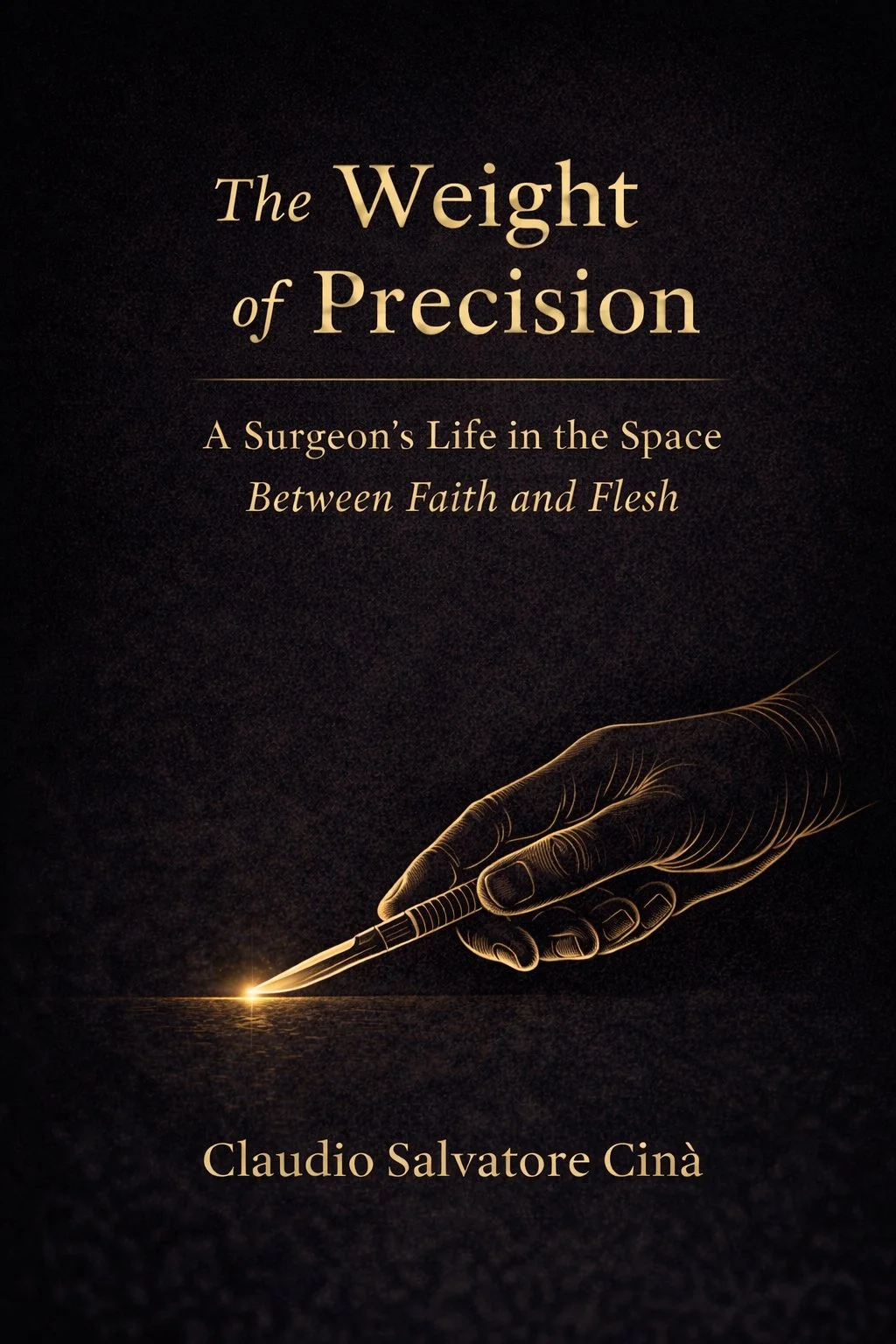
The Weight of Precision
A Surgeon's Life in the Space Between Faith and Flesh
A memoir of a surgeon's life written from the threshold between technical mastery and human fragility. Over four decades of practice across four healthcare systems — Italy, the United Kingdom, Canada, and the United States — Claudio Salvatore Cinà has worked at the edge of what the body will bear. The Weight of Precision is his reckoning with that work: the long education of a Sicilian boy who became one of Canada's senior vascular surgeons, the quiet toll of operating on strangers year after year, the 2016 stroke that interrupted his trajectory and forced him to become a patient, and the slow return to the operating theatre that followed.
It is also a book about the interior life of a profession that rarely speaks of itself — the loneliness of the long decision, the residue of outcomes that did not go well, the discipline required to keep going. Written in a measured, essayistic voice that owes as much to Primo Levi and Oliver Sacks as to medical literature, it is a book for readers who believe that technical work, pursued seriously, has a soul.
Books.
Three books, published in 2025, at the intersection of surgery, philosophy, and the Mediterranean imagination. A memoir, a scholarly volume on medical ethics, and a biographical novel — distinct in form, continuous in preoccupation.
Medical Ethics
The Surgeon's Perspective
Ethical complexity in surgery is not an abstraction — it lives in the small, often unrecorded decisions of the operating theatre: whether to proceed or to stop, how to frame consent for a patient who cannot fully understand, how to allocate finite resources in emergency contexts, how to weigh experimental innovation against the patient's best interest. Medical Ethics: The Surgeon's Perspective brings together leading surgeons and ethicists to examine these questions from within the discipline. Grounded in the classical principles of autonomy, beneficence, non-maleficence, and justice, the volume adapts each to the specific conditions of surgical practice.
Particular attention is given to informed consent in urgent settings, to the ethics of industry partnerships, and to the surgeon's role as an advocate for equitable access to care. Edited by Claudio Salvatore Cinà and published by Springer in 2025, this work provides surgeons, trainees, and ethicists with a principled yet flexible guide to navigating a field in rapid transformation — where technical precision and moral judgment can no longer be separated.
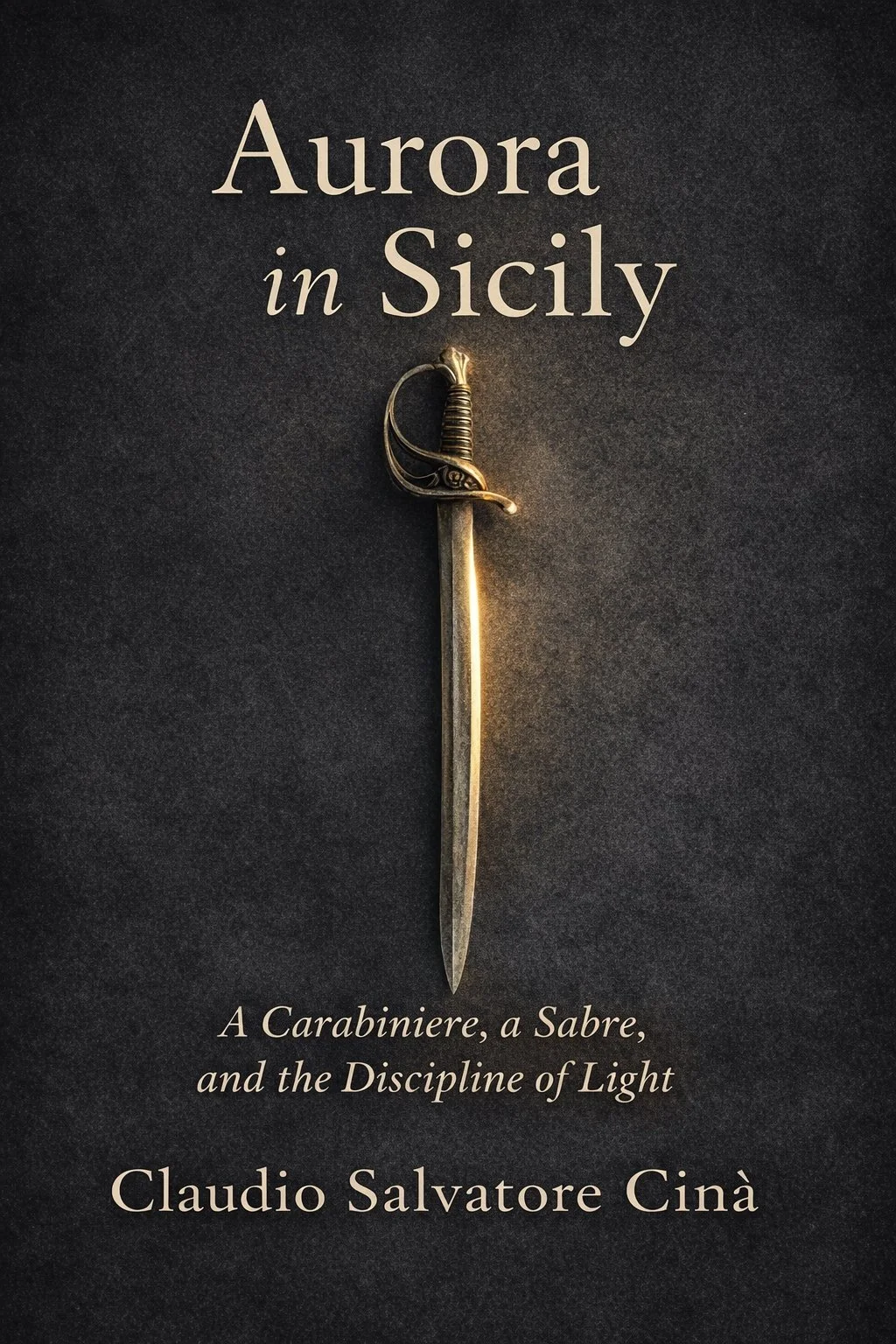
Aurora in Sicily
A Carabiniere, a Sabre, and the Discipline of Light
Aurora in Sicily traces the life of Pietro Cinà — a Carabiniere born in 1906 in a small Sicilian village, whose service spanned the fascist years, the Second World War, the Allied landing, and the long post-war rebuilding of southern Italy — through the eyes of his son. Part biographical novel, part historical chronicle, part filial reckoning, the book is a reconstruction built from fragments: family memory, archival documents, the quiet testimony of places, and the disciplined imagination required to give shape to a century of silence.
It is a portrait of a man for whom order, honour, and service were not slogans but a daily practice, and it is also a portrait of a Sicily that is rapidly disappearing — the Sicily of stone courtyards, small-town loyalties, and the long moral grammar of the Carabiniere. Written by a son who became an international surgeon and returned to his origins to understand them, Aurora in Sicily is a book about inheritance: what a father transmits without speaking, and what a son must work to recover.